news

Please send us news about clean-technology companies, trends, and industry events. All materials are subject to editorial review. E-mail us at editor@cleanedge.com.


indexes

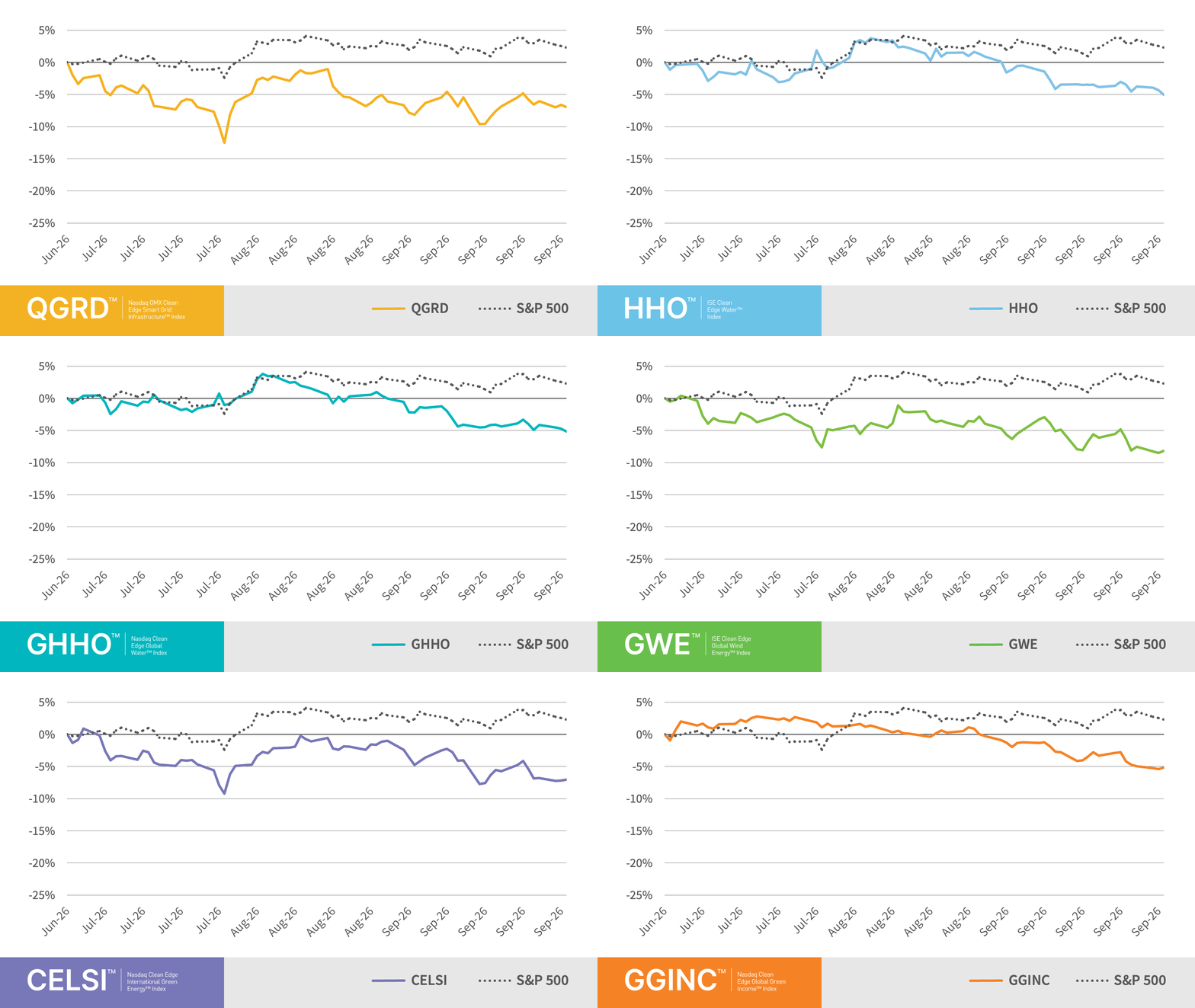
Clean Edge Stock Indexes: Tracking the Performance of U.S.-Traded Clean-Energy and Global Wind and Smart Grid Infrastructure Companies.

Subscribe to Clean Edge RSS
Search News:
[icon: Print]Print Bookmark and Share

Previous Story | Next Story

Energy Efficiency Initiatives Could Save $168.6 Billion

March 25, 2009
Source: Clean Edge News

Energy efficiency initiatives that reward consumers and businesses for reducing electricity and gas usage could result in utility bill savings of $168.6 billion, according to a report recently released by the American Council for an Energy-Efficient Economy (ACEEE). That number is 16 percent higher than ACEEE's previous savings estimate of $144 billion and is based on updated data. The organization released its new economic analysis as business leaders, industry groups, and environmental advocates launched the Campaign for an Energy-Efficient America, a coalition calling on Congress to enact a federal energy efficiency target.

ACEEE's report, Laying the Foundation for Implementing a Federal Energy Efficiency Resource Standard, analyzes 2008 economic and energy data and estimates benefits of a federal energy efficiency resource standard (EERS) requiring utilities to reduce electricity demand by 15 percent and natural gas demand by 10 percent by 2020. The report noted the significant benefits of energy savings achieved by the proposed federal EERS, including:

-- 222,000 net permanent, high quality jobs in construction, manufacturing, and other fields;
-- 262 million metric tons of greenhouse gas emissions prevented – the equivalent of taking 48 million cars of the roads for one year; and
-- 390 power plants that won’t need to be built.

Nineteen states have adopted individual EERS programs, but Americans cannot realize the full potential for energy efficiency without a federal program to enhance states’ efforts. ACEEE analyzed the benefits of a federal EERS for each state by 2020. For example:

-- Florida will create more than 19,500 new jobs and save $14 billion in energy costs.
-- Illinois will create more than 6,500 new jobs and save $3.6 billion in energy costs.
-- Indiana will create more than 5,000 new jobs and save $3.6 billion in energy costs.
-- North Carolina will create nearly 6,500 new jobs and save $3 billion in energy costs.
-- Tennessee will create more than 5,000 new jobs and save $3.5 billion on energy costs.