news
Please send us news about clean-technology companies, trends, and industry events. All materials are subject to editorial review. E-mail us at editor@cleanedge.com.
indexes
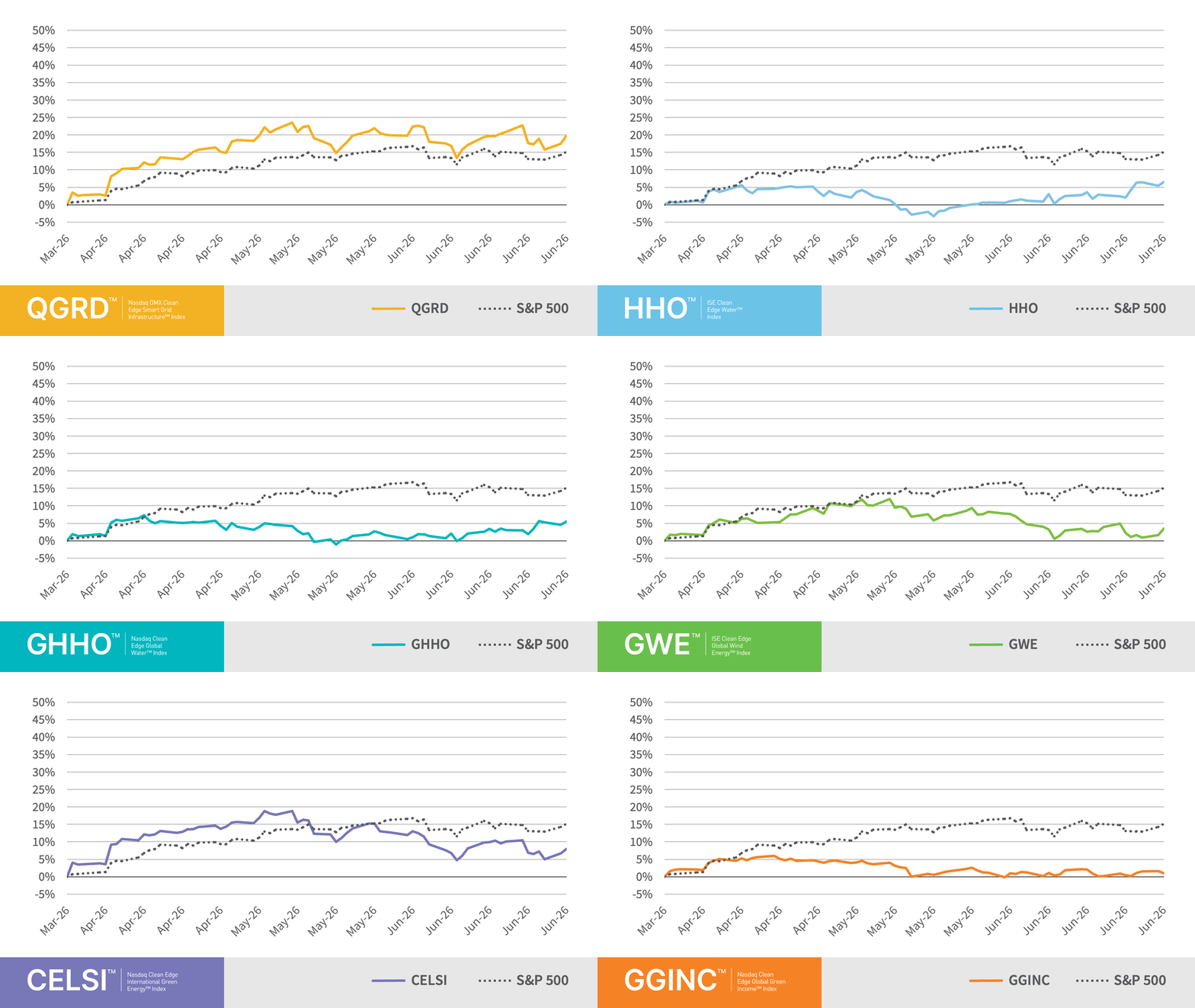
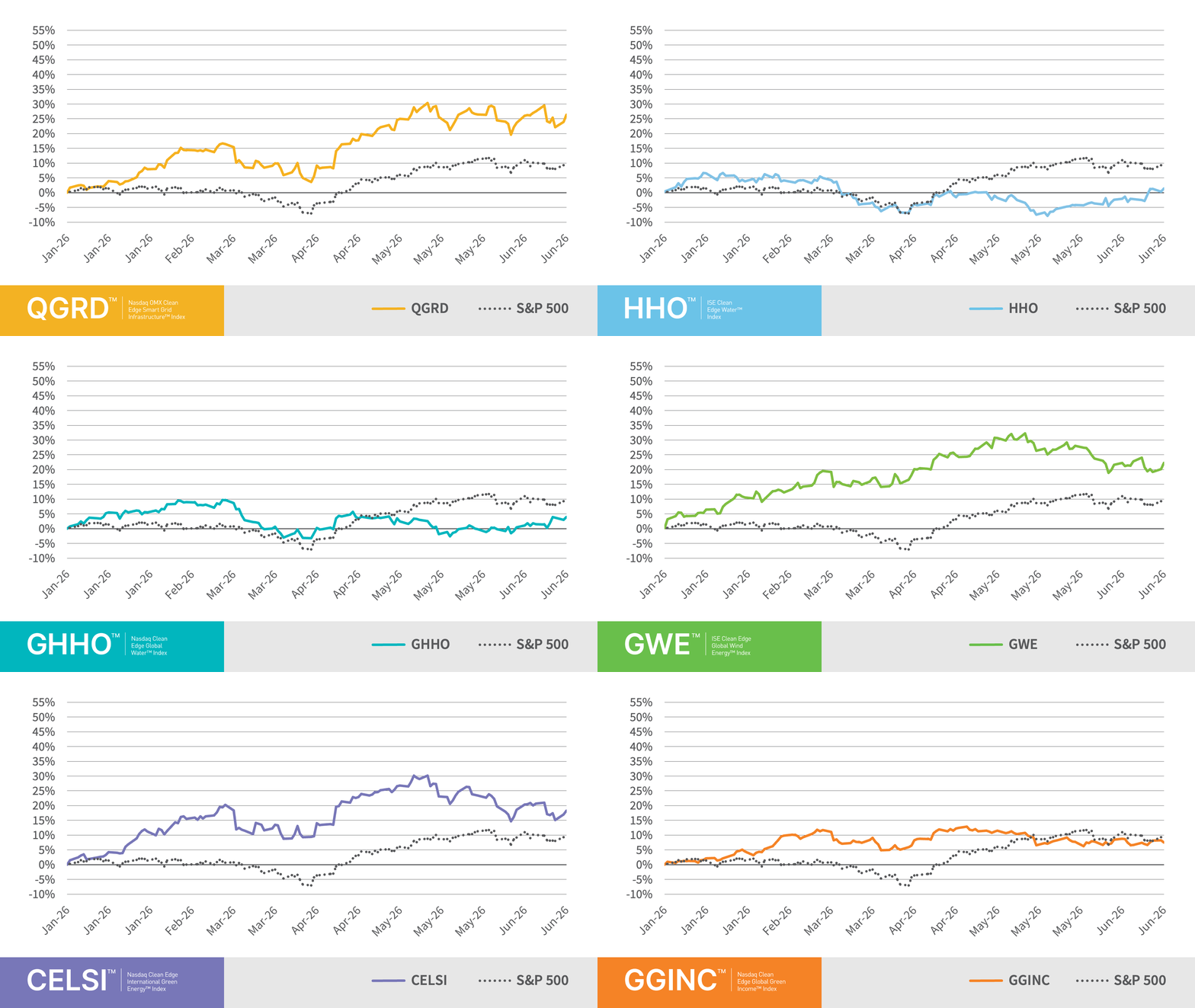
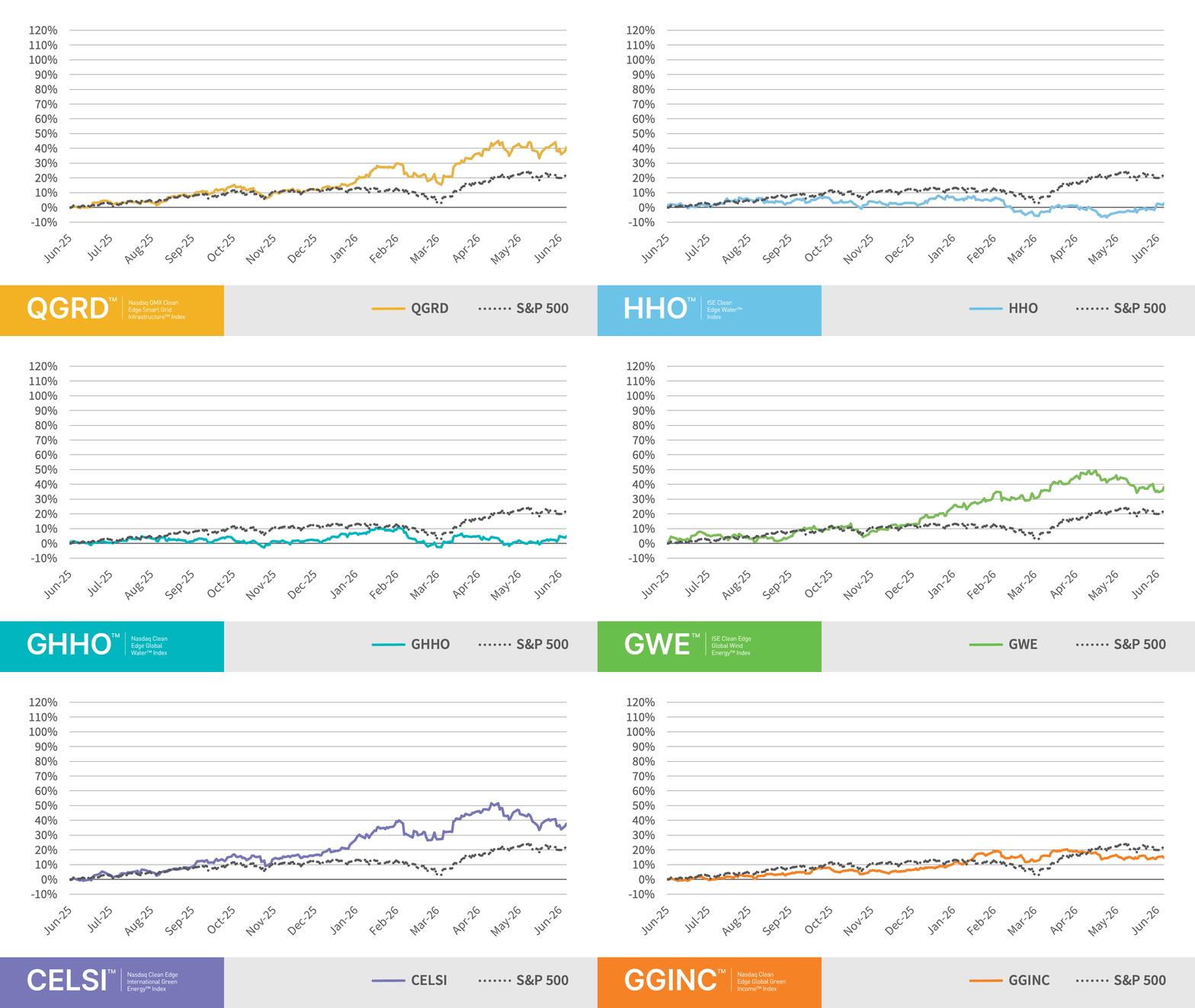
Clean Edge Stock Indexes: Tracking the Performance of U.S.-Traded Clean-Energy and Global Wind and Smart Grid Infrastructure Companies.
Solar Energy Industries Association Releases 2008 Solar Industry Year in Review
March 25, 2009Source: Clean Edge News
Solar Energy Industries Association (SEIA) recently released its
2008 U.S. Solar Industry Year in Review, highlighting a third year
of record growth. The report notes that 1,265 megawatts (MW) of
solar power of all types were installed in 2008, bringing total U.S.
solar power capacity up 17 percent to 8,775 MW. The 2008 figure
included 342 MW of solar photovoltaic (PV), 139 MWTh (thermal
equivalent) of solar water heating, 762 MWTh of pool heating and an
estimated 21 MW of solar space heating and cooling.
According to the report, rates of growth beat last year's as well,
with the grid-tied PV segment leading with a growth rate of 81
percent for the amount of installed power in 2008 (292 MW) over the
amount installed in 2007 (161 MW). Solar water heating installation
grew at a 50 percent rate in 2008 (139 MWTh) over 2007 (93 MWTh) and
pool heating growth slowed by 3 percent in 2008 (762 MWTh) from 2007
(785 MWTh).
SEIA reports that no new concentrating solar power plants came
online in the United States this past year, but projects now in the
pipeline add up to more than 6 gigawatts (6,000 MW). Among these are
projects planned for California’s Mojave Desert, Arizona and
Florida. Four gigawatts of solar energy can power up to a million
households.
States that led in grid-tied PV installation were California (178.6
MW)[1], New Jersey (22.5 MW), Colorado (21.6 MW), Nevada (13.9) and
Hawaii (11.3 MW). For solar water heating systems, Hawaii led
states, installing 37 percent of the total U.S. systems in 2008,
followed by Florida (20 percent), California (7 percent), Colorado
(5 percent) and Arizona (5 percent). The Mid-Atlantic States, an
important emerging region for solar, installed 7 percent of solar
water heating systems.
Several states added or expanded incentives or requirements for
solar energy including California, Hawaii, Maryland, Massachusetts,
Missouri and Ohio. To date, 28 states have renewable portfolio
standards that require a certain amount of energy be generated from
renewable sources, with 19 of these states mandating a portion come
from solar or distributed sources. (Distributed generation occurs on
land and buildings close to where the energy is used rather than
central station power that is transported via power lines.)
A total of 42 states and the District of Columbia now have net
metering rules allowing owners of solar energy systems to sell
excess electricity back to the grid. However, these rules differ
from state to state and a unified national policy is necessary.
The U.S. solar industry increased domestic PV manufacturing capacity
by 65 percent, creating desperately needed jobs in states such as
California, Michigan, Ohio, Oregon and Tennessee as they increased
production capacity to 685 MW.
The report highlights the rapid growth of the U.S. solar energy
market:
-- Overall U.S. solar industry capacity increased 17
percent.
-- Installed grid-tied PV increased 58 percent in 2008 from
2007 and grew at a faster rate, 81 percent compared to 2007.
-- Installed grid-tied PV increased by more than 18,000
installations in 2008, or more than 27 percent, compared to the
14,306 installations in 2007.
-- More than 6 GW (6,090 MW) of utility-scale CSP plants
are in the pipeline.
-- PV manufacturing capacity increased 65 percent and
production grew by 53 percent.
-- Top states for grid-tied PV capacity additions in 2008:
Calif. (178.6 MW), N.J. (22.5 MW), Colo. (21.6 MW), Nev. (13.9),
Hawaii (11.3 MW)
-- Top states for total cumulative grid-tied PV: Calif.
(530.1 MW); N.J. (70.2 MW), Col. (35.7 MW) and Nevada (33.2).
The Emergency Economic Stabilization Act of 2008 included an 8-year
extension of the federal solar investment tax credit that has
spurred U.S. market growth over the last 3 years. This long-term
extension will facilitate the long-term planning and investment
necessary for the U.S. solar industry to reach its full potential.
The American Recovery and Reinvestment Act of 2009 also included
several provisions that should support continued growth in solar
deployment including a 30-percent grant program for commercial and
utility-scale solar installations to be administered by the
Department of Treasury, a Department of Energy loan guarantee
program, and a 30-percent manufacturing investment tax credit to
attract investors to the U.S. market. Crafted wisely, other policies
being debated at the national level – electric transmission
infrastructure, national RPS, and global warming legislation – would
also stimulate continued growth of the industry.
See the full report at http://www.seia.org/galleries/pdf/2008_Year_in_Review-
small.pdf.