news
Please send us news about clean-technology companies, trends, and industry events. All materials are subject to editorial review. E-mail us at editor@cleanedge.com.
indexes
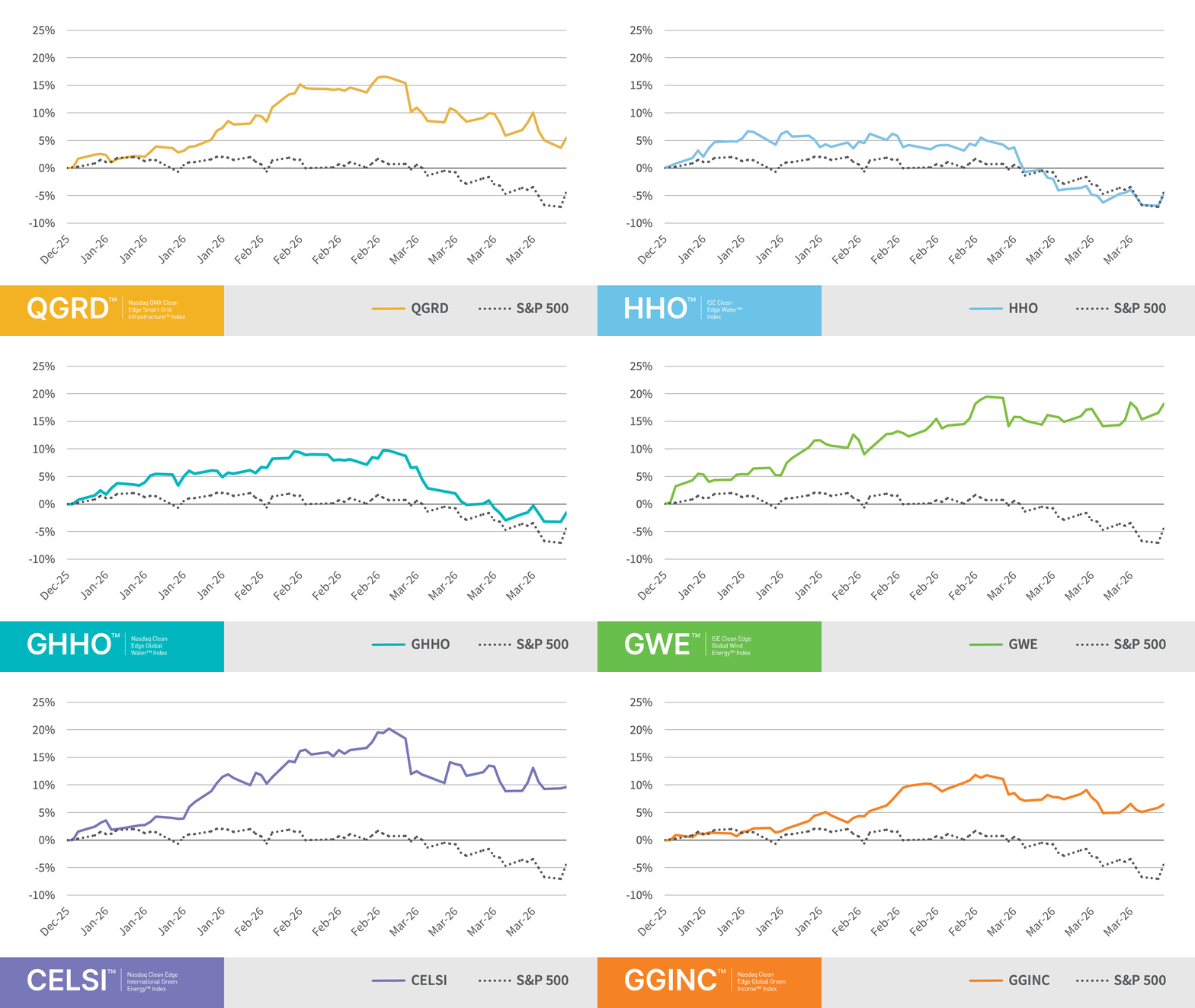
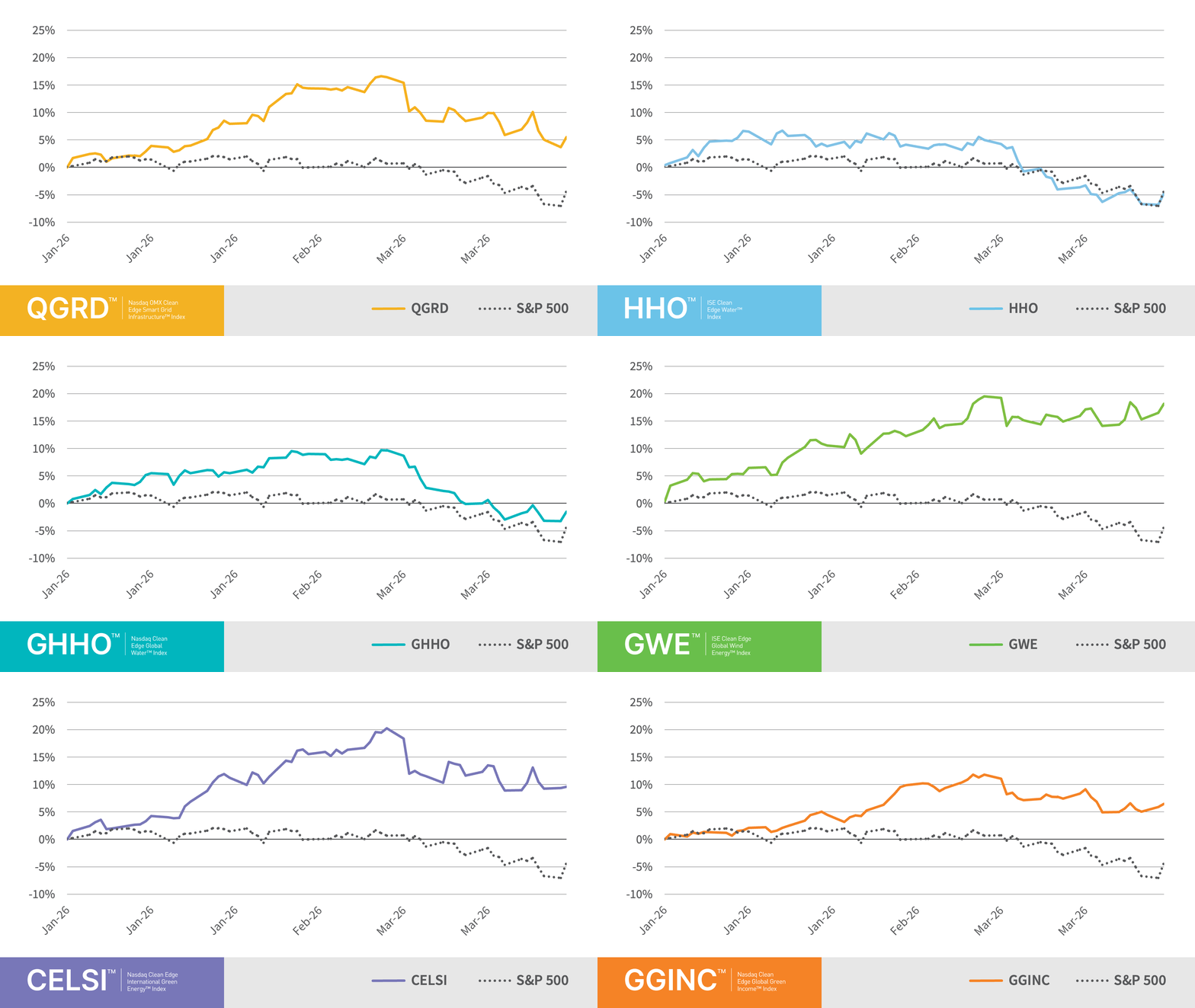
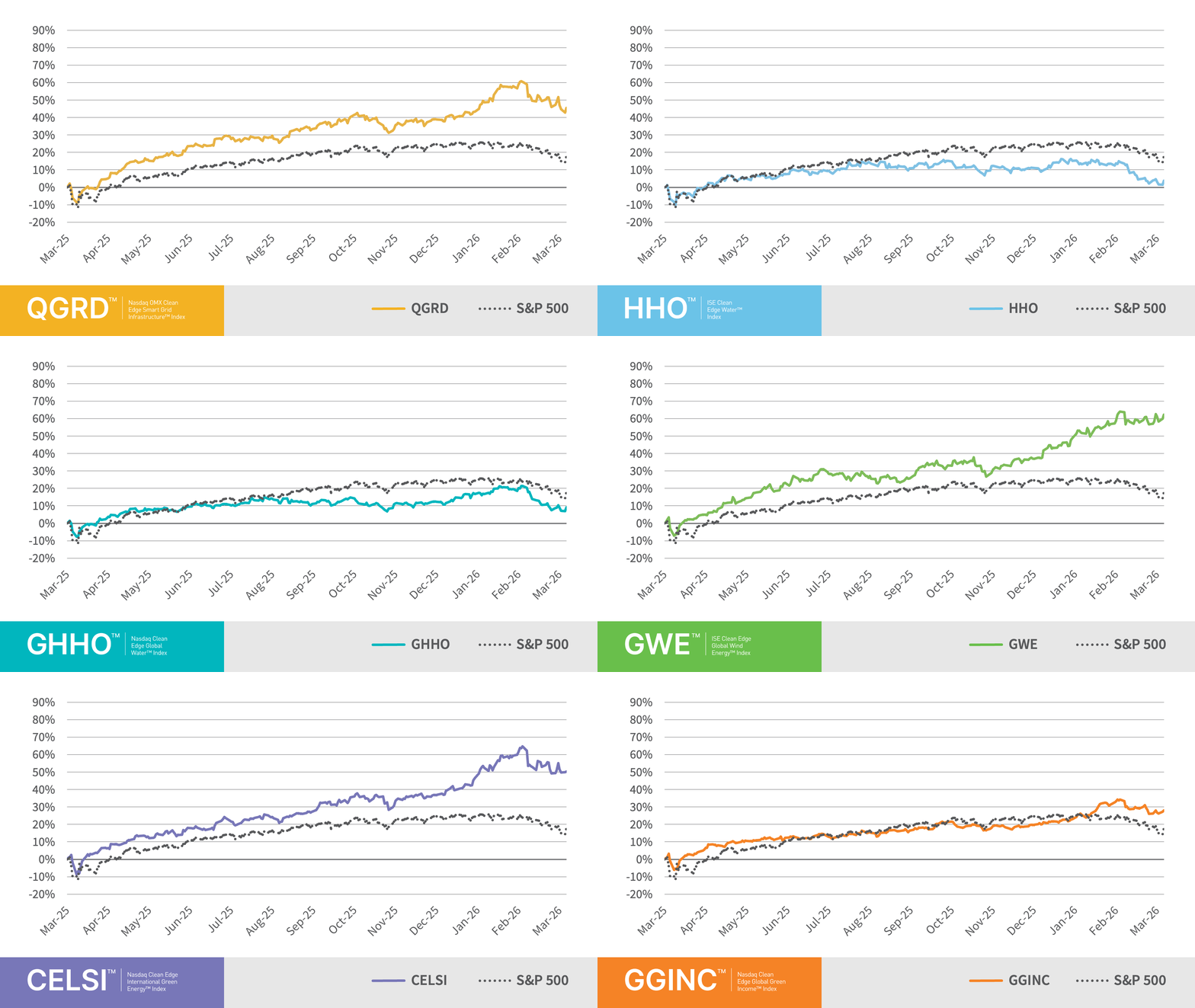
Clean Edge Stock Indexes: Tracking the Performance of U.S.-Traded Clean-Energy and Global Wind and Smart Grid Infrastructure Companies.
11 States Agree to Work Together to Reduce Greenhouse Gas Emissions from Vehicle Fuels
January 6, 2009Source: Clean Edge News
Massachusetts and 10 other Northeast and Mid-Atlantic states have
committed to developing a regional Low Carbon Fuel Standard in order
to reduce greenhouse gas emissions from fuels for vehicles and other
uses, Secretary of Energy and Environmental Affairs Ian Bowles
recently announced. These 11 states - which include all the member
states of the Regional Greenhouse Gas Initiative (RGGI) plus
Pennsylvania - will work together to create a common fuel standard
that will reduce greenhouse gas emissions on a technology-neutral
basis.
In June, Governor Deval Patrick sent a letter to the governors of
all 10 RGGI states inviting them to work with Massachusetts on
developing a Low Carbon Fuel Standard that would apply to the entire
region, creating a larger market for cleaner fuels, reducing
emissions associated with global climate change, and supporting the
development of clean energy technologies. Last week, the heads of
environmental protection agencies and, in some cases, energy
agencies in the states of Connecticut, Delaware, Maine, Maryland,
Massachusetts, New Hampshire, New Jersey, New York, Pennsylvania,
Rhode Island, and Vermont signed a Letter of Intent to tackle the
challenge of reducing greenhouse gases from fuels in a joint effort.
As stated in the Letter of Intent, which was made public recently, a
Low Carbon Fuel Standard is a market-based, technologically neutral
policy to address the carbon content of fuels by requiring
reductions in the average lifecycle greenhouse gas emissions per
unit of useful energy. Such a standard is potentially applicable not
only in transportation, but also for fuel used for heating
buildings, for industrial processes, and for electricity generation.
The state of California was the first to commit to a LCFS for motor
vehicles, which it is now in the process of developing. Fuels that
may have potential to reduce the carbon intensity of transportation
include electricity and advanced biofuels that have lower lifecycle
carbon emissions and are less likely to cause indirect effects from
crop diversion and land use changes than those on the market today.
In the Letter of Intent, the 11 states commit to participating in an
effort to analyze low carbon fuel supply options and develop a
framework for a regional LCFS in the Northeast-Mid-Atlantic region,
in order to ensure sustainable use of renewable fuels in the region.
The states will collaborate with the Northeast States for
Coordinated Air Use Management (NESCAUM), which is conducting a
study of a LCFS for the region. The states also agree to work
cooperatively with other states and the federal government, and to
seek to influence the design of any federal LCFS or other fuels
policy that is proposed.
The Letter of Intent also commits the 11 signatory states to
drafting a Memorandum of Understanding concerning the development of
a regional low carbon fuel standard program, to be forwarded for
consideration by the governors of the states by December 31, 2009,
or as soon thereafter as possible.