news
Please send us news about clean-technology companies, trends, and industry events. All materials are subject to editorial review. E-mail us at editor@cleanedge.com.
indexes
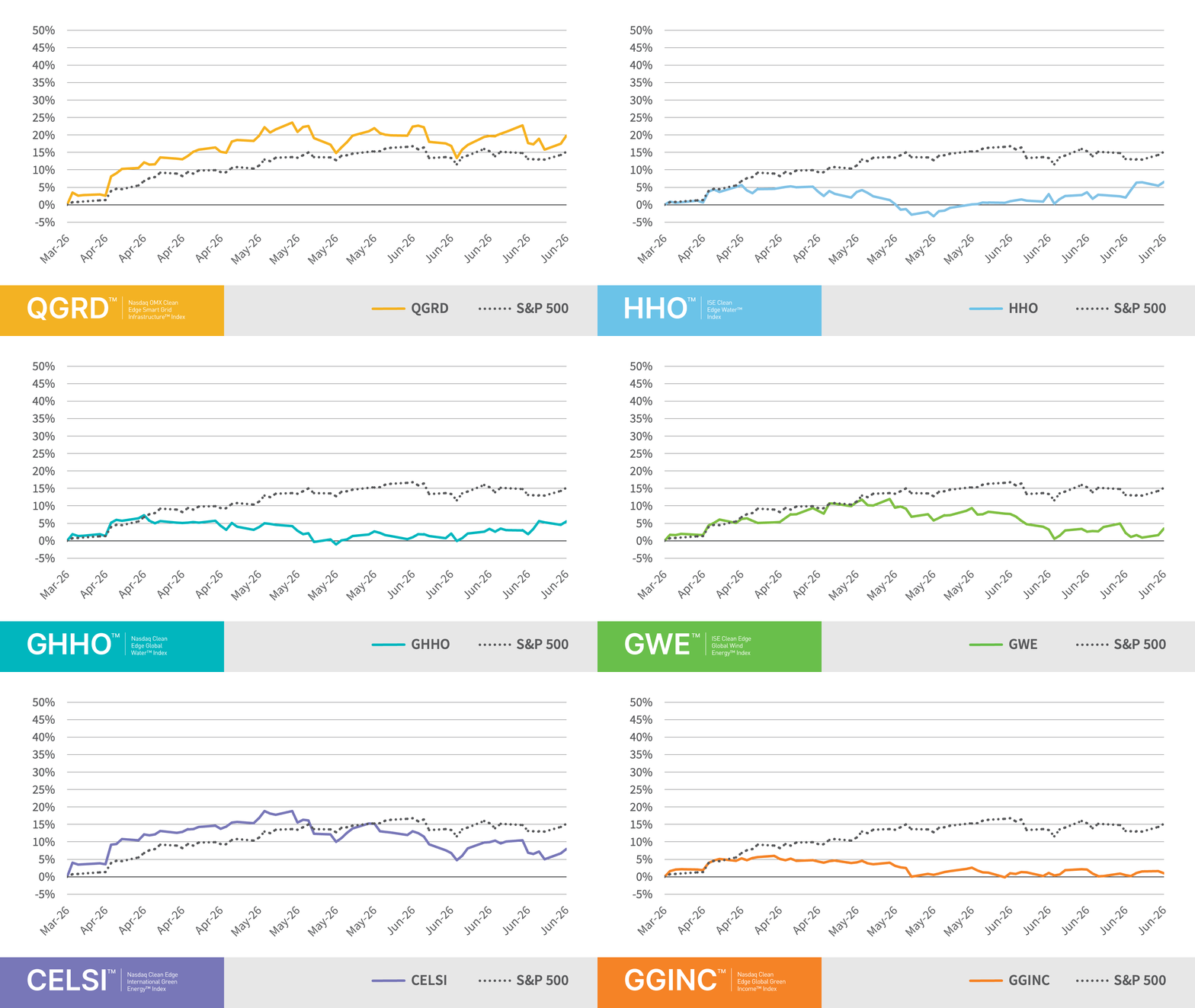
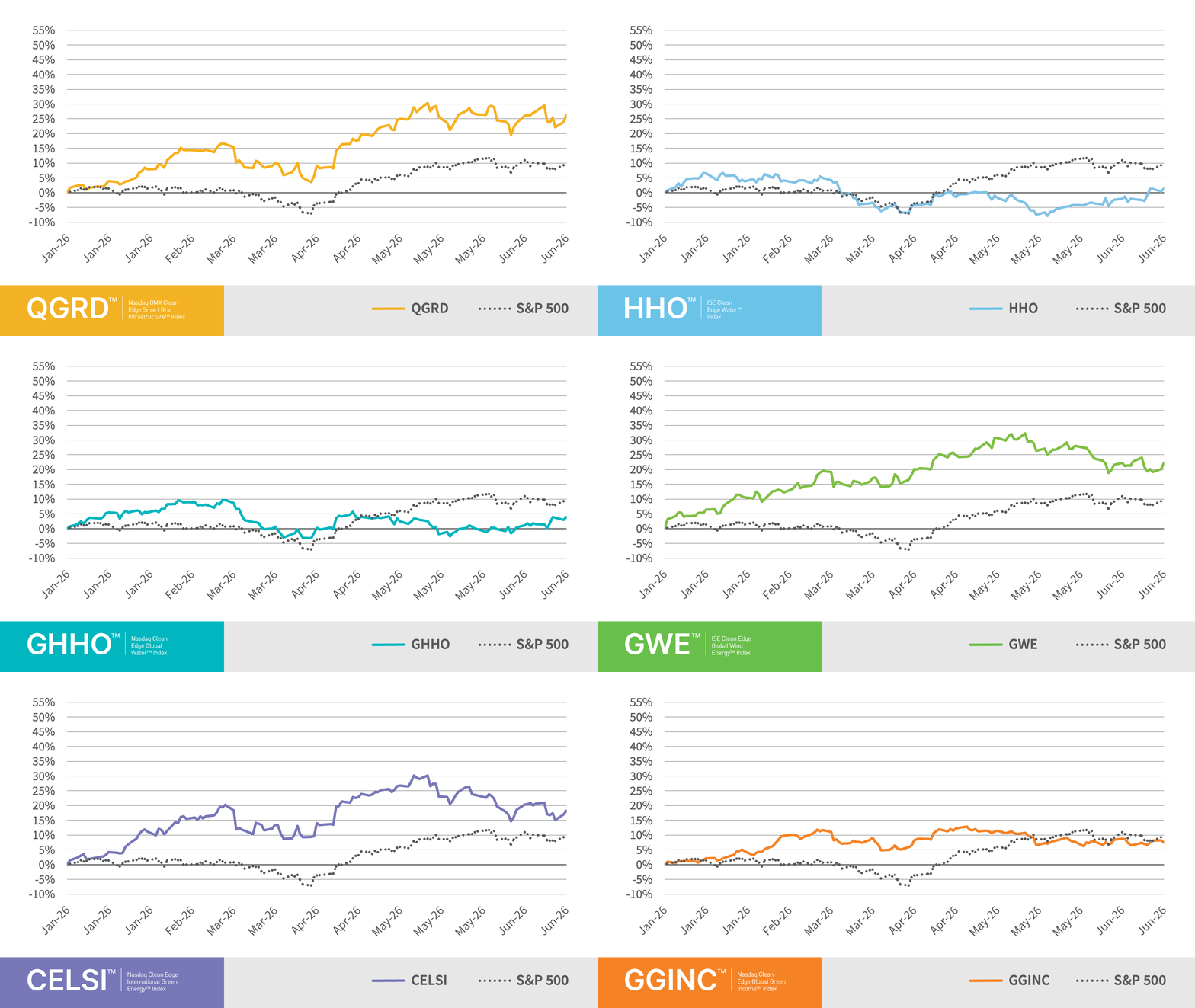
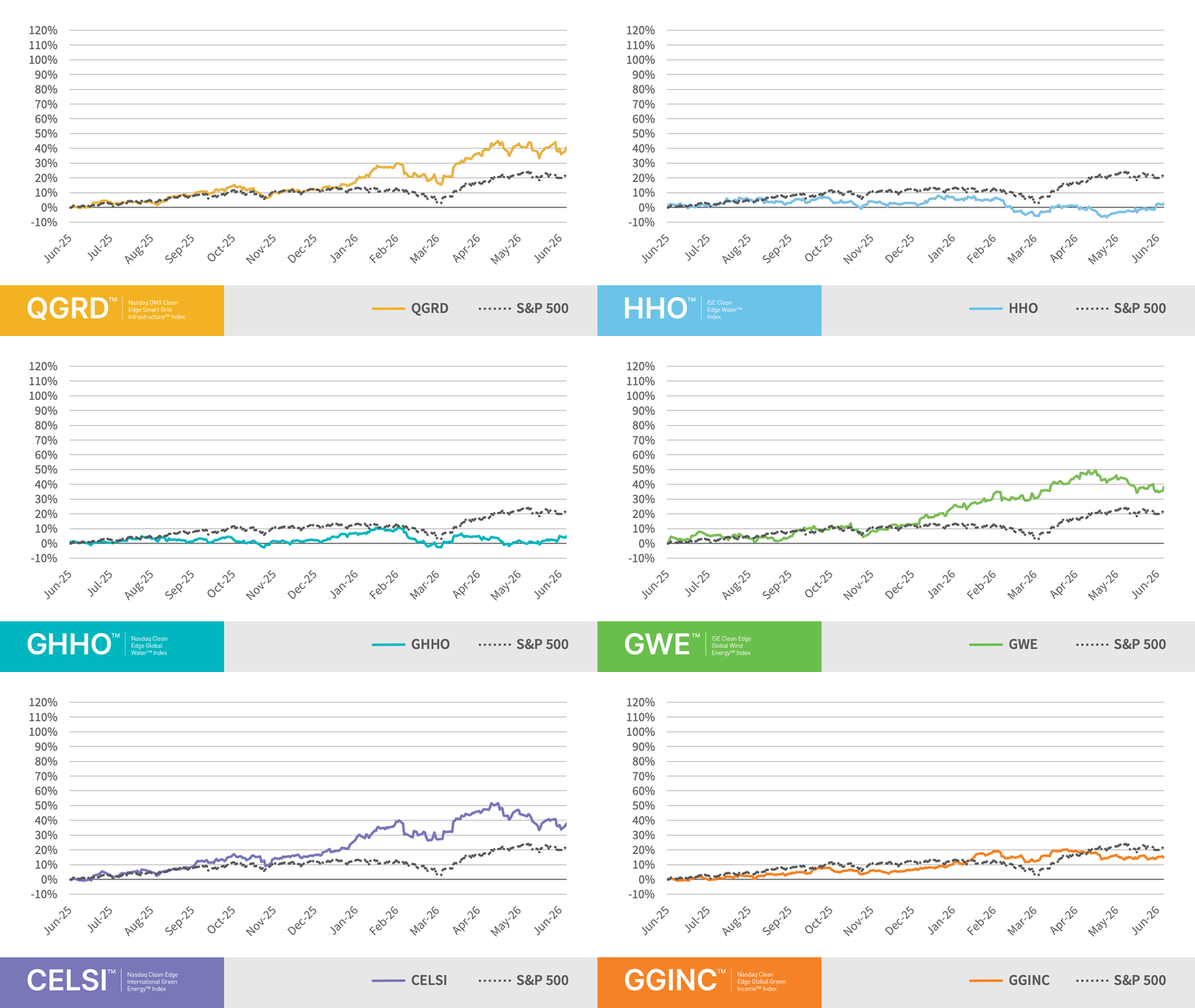
Clean Edge Stock Indexes: Tracking the Performance of U.S.-Traded Clean-Energy and Global Wind and Smart Grid Infrastructure Companies.
AWEA Wind Power Trends to Watch for in 2009
December 30, 2008Source: Clean Edge News
As the wind industry closes out another banner year, the American
Wind Energy Association (AWEA) is looking ahead to further progress
in 2009. Although the industry is buffeted by the financial crisis
and economic downturn, it is also buoyed by a strong strategic
position and the prospect of strong policy support from Congress and
the new President. Here are some wind energy projections for the New
Year:
“The world’s largest operating wind power project” will be a
hotly contested designation this year: At least one new project
may soon surpass FPL Energy’s 736-megawatt (MW) Horse Hollow wind
farm, which has been the world’s largest for three years running.
One project under expansion, by E.ON Climate & Renewables (EC&R)
North America, and currently scheduled to go online in mid-2009,
would have a total capacity of 781.5 megawatts (MW) when it is
completed. The Horse Hollow Wind Energy Center, located in Taylor
and Nolan counties, Texas, claimed the title in 2006. “The Horse
Hollow Wind Energy Center is an important new source of clean,
renewable power for the region that also provides significant
economic benefits to the area in the form of taxes, new jobs, lease
payments to landowners, and the purchase of local goods and
services,” said FPL Energy President Jim Robo at the time of its
commissioning. Gigawatt-size projects (in the thousands of
megawatts) like the ones proposed by T. Boone Pickens and Shell Wind
Energy are also in the pipeline but will take several years to be
built.
Wind power: second-largest source of new U.S. power generating
capacity for 5th year in a row? Wind is now a mainstream option
for new power generation, second only to natural gas plants in new
capacity built from 2005 through 2007, and probably again in 2008,
pending year-end figures. Measured by market share, wind provided
35% of all new generation added in the U.S. in 2007. And with 7,500
MW of new capacity expected when 2008 figures are released, wind is
likely to contribute at least 35% of new capacity added this year.
This is one more indicator that wind power is abundant, affordable
and available now to contribute a growing portion of our national
electricity supply.
Hopes run high for greater federal policy stability:
President-elect Obama has outlined a range of policies that would
encourage investments in wind and renewables, and these policies are
expected to be on the table for serious discussion and possible
early action in 2009. The policies would signal a welcome shift for
renewable energy technologies, whose deployment has been hampered by
the absence of long-term policy stability. New policies include:
adjusting the federal production tax credit (PTC) to make it more
effective in the midst of the current economic downturn and
extending it for a longer term (it expires at the end of 2009);
establishing a national renewable electricity standard (RES) with a
target of generating at least 25% of the nation’s electricity from
renewables by 2025, and a near-term target of 10% by 2012 (a
Washington Post poll in early December found that 84% of Americans
support such a standard);
legislation and initiatives to develop a high-voltage interstate
transmission “highway” for renewable energy; and
strong national climate change legislation.
States will focus on RES, transmission for renewables:
Expect one or more states to implement (Indiana) or strengthen
(Wisconsin and New York) their Renewable Electricity Standards
(RES), bringing the number of states with an RES from 28 to perhaps
30. Look also for some states, including some without an RES
(Oklahoma, Kansas, Nebraska) to develop a process to facilitate
investment in transmission for electricity generated using
renewables. Texas, Colorado, Minnesota, and California have already
shown the way with pro-active transmission policies for renewable
energy.
“Baseload/peaking” is “out” and “smart mix” is “in”: The
electric industry faces dramatic transformations as it wrestles with
the challenges of the 21st century. The old paradigm that
assumed “baseload” power plants were necessary is being replaced by
a new paradigm where both demand and supply are managed in tandem,
and electricity is supplied by a smart, clean mix including a high
level of renewable and flexible technologies. Under its 20% wind by
2030 scenario (www.20percentwind.org), the U.S. Department of Energy
found that 20% wind would likely reduce the need for new coal and
leave the level of nuclear power unchanged.
More community wind projects in 2009: The fast-growing wind
power market is also opening up opportunities for community wind,
which are projects owned by farmers, ranchers or other local
investors or public entities. Look for more community wind
proposals in 2009, and more AWEA education and outreach on the topic
over the course of the year.
AWEA business membership will surge past 2,000 by mid-year:
More companies see opportunities in the wind energy industry, and
the expanding AWEA business membership roll is a measure of that
interest. AWEA business membership increased from 200 in 2000, to
more than 600 in 2005, and has soared over the 1,800 mark in 2008.
If the trend continues, the roll of AWEA member companies could
pass 2,000 by mid-2009. Most of the new members are companies in
the wind power supply chain.
Industry will finalize guidelines for wind turbine O&M: When
an industry becomes mainstream, it needs to put in place a variety
of standards and guidelines, and wind power is no exception. AWEA
and the wind power industry are working with the Occupational Safety
and Health Administration (OSHA) to develop safety guidelines for
wind turbine technicians and O&M workers at utility-scale wind
projects. AWEA will be presenting educational webinars to OSHA
personnel in early 2009.
AWEA expects to finalize standards for small wind turbines:
Standards for small wind turbines will help ensure qualification for
the new small wind turbine federal investment credit that is now
available for homeowners and small businesses investing in a small
wind system. Manufacturing standards have long been in place for
utility-scale wind turbines and continue to evolve with the
technology.
Larger incentive for small wind? Homeowners, farmers, and
small-business owners now benefit from a federal incentive enacted
in late 2008 for the purchase of small wind systems. However, this
credit is capped. Owners of small wind systems with 100 kilowatts
(kW) of capacity and less can receive a credit for 30% of the total
installed cost of the system, not to exceed $4,000. For turbines
used for homes, the credit is additionally limited to the lesser of
$4,000 or $1,000 per kW of capacity. Look for an effort to remove
this limitation, so that consumers can benefit from a credit of a
full 30% of the total cost of a small wind turbine purchased for an
individual home or business.
Denise Bode takes the helm at AWEA: Denise Bode steps in as
the new CEO for the American Wind Energy Association on January 5,
succeeding Randall Swisher, who retired in 2008 after leading the
association and industry for 19 years. Bode takes over at an
exceptional time for the industry. Also new is AWEA’s logo at the
top of this page. The logo has been updated to reflect the new era
for wind energy in the U.S.